CREATIVE DIRECTOR (ART) – UK & EU BASED, AVAILABLE GLOBALLY
SS26; Fashion Capitals in Transition
Fashion global capitals - New York, London, Milan and Paris - continue to define the industry, however their relevance lies not only in spectacle and media coverage, but in how they respond to change and context.
Each capital reflects a different dimension of fashion’s current state yet collectively they reveal a reset in the industry, one that values storytelling, inclusivity, craftsmanship and purpose as essential value to its future.

New York: Wearability Meets Cultural Pulse
Economic instability, tariff changes and policy uncertainty forcing designers to change production models, encouraged this season New York fashion week’s focus on commerciality, where pieces could strut right off the catwalk to the sales floor.
National unpredictability impacted the show’s designers’ presence -established houses like Tory Burch, Klein, Coach, Khaite and Michael Kors led the show over upcoming talent- as well as its aesthetics -dominant neutral tones, cuts that focused on elevated daywear and hints of escapism through pops up colour and structure (Toteme, Tory Burch, Michael Kors, Luar).
Standout shows included Collina Strada’s ‘Shade’ -for its political messaging embodied by a hero look and its ‘shadow’ version-, Rachel Scott’s debut with Proenza Schouler -and her personal imprint on textures-, Tory Burch -for its hope and optimism messaging through the reinterpretation of American classics-, and COS -for its juxtaposition designs and the show’s vast white box location as a spectacle of modernist elegance (COS, 2025)-.
Despite reflecting the realities of the current industry, New York Fashion Week was praised for its clarity and commerciality amongst sensible pieces, and for its shift in leadership narratives and indie voices such as Zankov and Diotima.


London: The Creative Resistance
This season London has proven its ability to reinvent and reassure innovation through creative vision and new talent. In spite of the national challenges post-Brexit and pandemic and the decrease in demand, key industry figures such as Laura Weir -new British Fashion Council CEO- are leading the way for fashion to become a UK economic powerhouse, fostering the next generation of British design talent.
Highlighted shows were Simon Rocha’s -for its whimsical and romantic aesthetics and its hero floral motifs-, Roksanda’s -for its 20th anniversary with a collection celebrating sculptural silhouettes with optimistic hints of colour-, Oscar Ouyang -for its knitwear collection pushing menswear beyond everyday expectations-, and Burberry’s -with Daniel Lee, for its British festival aesthetic that mixed heritage with young culture and spot on guest list that saw British figures such as Elton John, Raye, Alexa Chung, Naomi Campbell or Lila Moss.
Heavily influenced by street style -layering cuts, track jackets, knitwear, slogan tees, mixed textures- London regained the focus as a creative hub for inclusivity and innovation, leaving buyers and editors genuinely inspired, giving the week a rhythm of progress and strong sense of momentum (Tiffany Hsu, 2025).
Milan: Heritage Reinvention
Amid US tariff unpredictability, Italy is reassessing its exports’ strategies leveraging innovation and sustainability as China and India increase their production quality. This reflected into this season’s Milan Fashion Week by tapping into commerciality and presenting more wearable clothes.


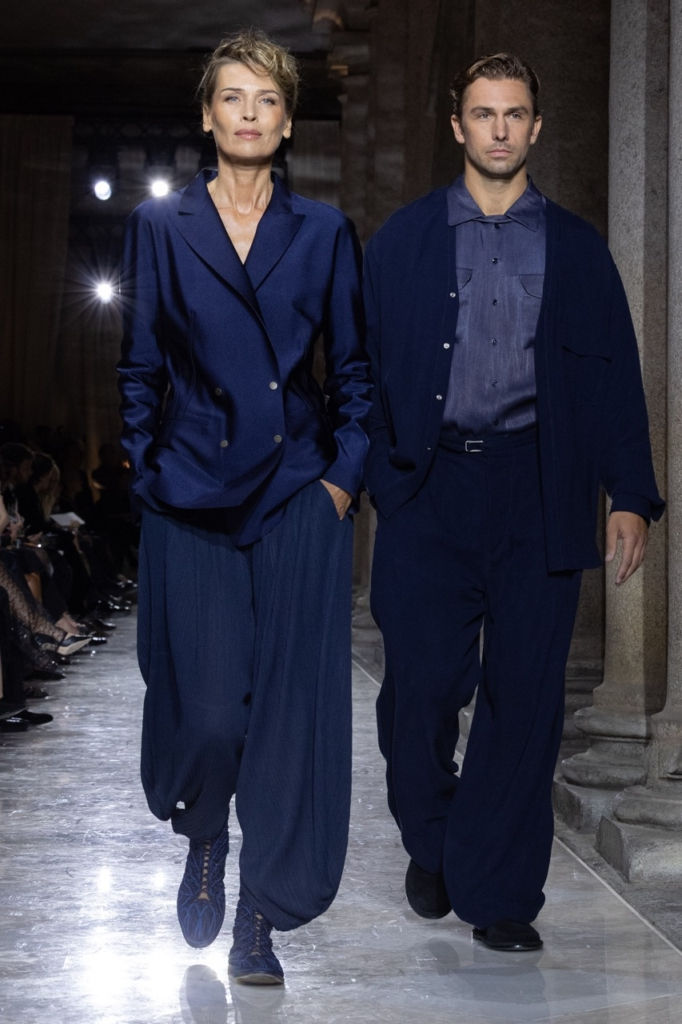
Regardless of the challenging retail climate, Milan Fashion Week stood out for its celebration of the past and future. Armani’s final collection became the week’s emotional centre amongst press and public, while considerable coverage was given to debuts. Louise Trotter’s Bottega Veneta -for its house’s craftsmanship appreciation-, Dario Vitale’s Versace -for reimagining the brand’s heritage through modern consumer lenses-, Demna’s Gucci -for its cinematic approach with film Tiger and its tributes to Gucci’s signatures- and Simone Belloti’s Jil Sander -for its nods to the founder’s influence on 90s minimalism-. Similarly to Burberry’s approach, Dolce & Gabbana were the centre of public discussion for The Devil Wears Prada 2’s hero cast attendance.
SS26 Milan Fashion Week was praised for embracing reality and relatability -combining luxury codes with pragmatic silhouettes- and the use of unconventional show formats -Diesel’s city egg hunt or Gucci’s film-. The city’s collections celebrated craft and heritage while presenting new opportunities for supply chain ethics and “Made in Italy” prestige.
Paris: Spectacle Meets Substance
Paris remains fashion’s sensitivity epicentre, yet this season’s collections merged legacy with innovation, sustainability and tech developments. Many of Paris’ historical and cultural heritage buildings became the shows’ stages, honouring cultural legacy, after several public discussions this year to significantly reduce repairs and maintenance funding.
In the spotlight, before the week ends, were Schiaparelli’s show -for Daniel Roseberry’s surrealist homage to Elsa Schiaparelli and Dalí, alongside abstract yet adaptable cuts and transparencies-, JW Anderson’s womenswear debut with Dior -for reimagining classic Dior cuts and French heritage into modern staples with surrealist accessories-, Stella McCartney’s -for its bold bet with fevvers, an ethical feather alternative and its collection’s oppositions through structure-softness, masculine-feminine codes.
Although the city is yet to host several awaited shows - Blazy’s Chanel, McCollough and Hernandez’s Loewe, Piccioli’s Balenciaga, Lantink’s Jean Paul Gaultier and Freitas’ Mugler - it appears innovation and heritage are blended into this season’s collections, giving a twist to the artistic haute couture scene through embraced personality in tactile textures, expressive prints and striking colours.
As fashion’s global capitals evolve, they no longer compete for attention through spectacle alone. Instead, they respond to a collective desire for meaning - authenticity, craftsmanship and storytelling that resonates beyond the runway. New York commercialises clarity, London celebrates creative resilience, Milan honours heritage, and Paris fuses legacy with innovation. Together, they mark a new chapter for the industry: one where transition is not disruption, but renewal.